
Temperance
Or, Beware the Demon Drink

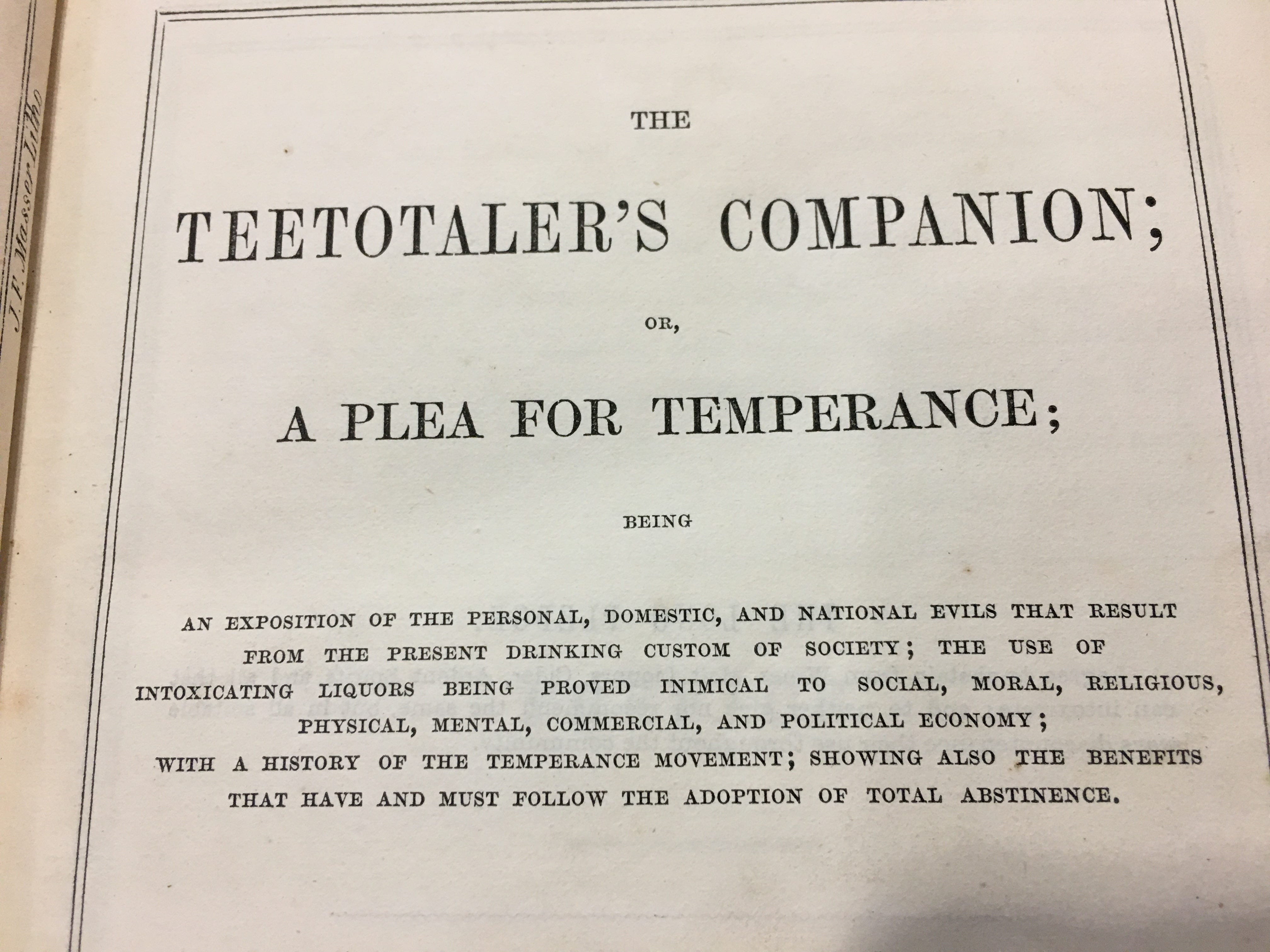
Ever since promising/threatening to write about temperance tracts here, I’ve been wondering how to make the topic palatable. Anti-drinking messages are not to everyone’s taste, especially if, like me, you enjoy drinking and value it dearly as an important part of your social (and dare I say, solitary) life. Why would anyone want to read earnest polemics against the evils of alcohol?
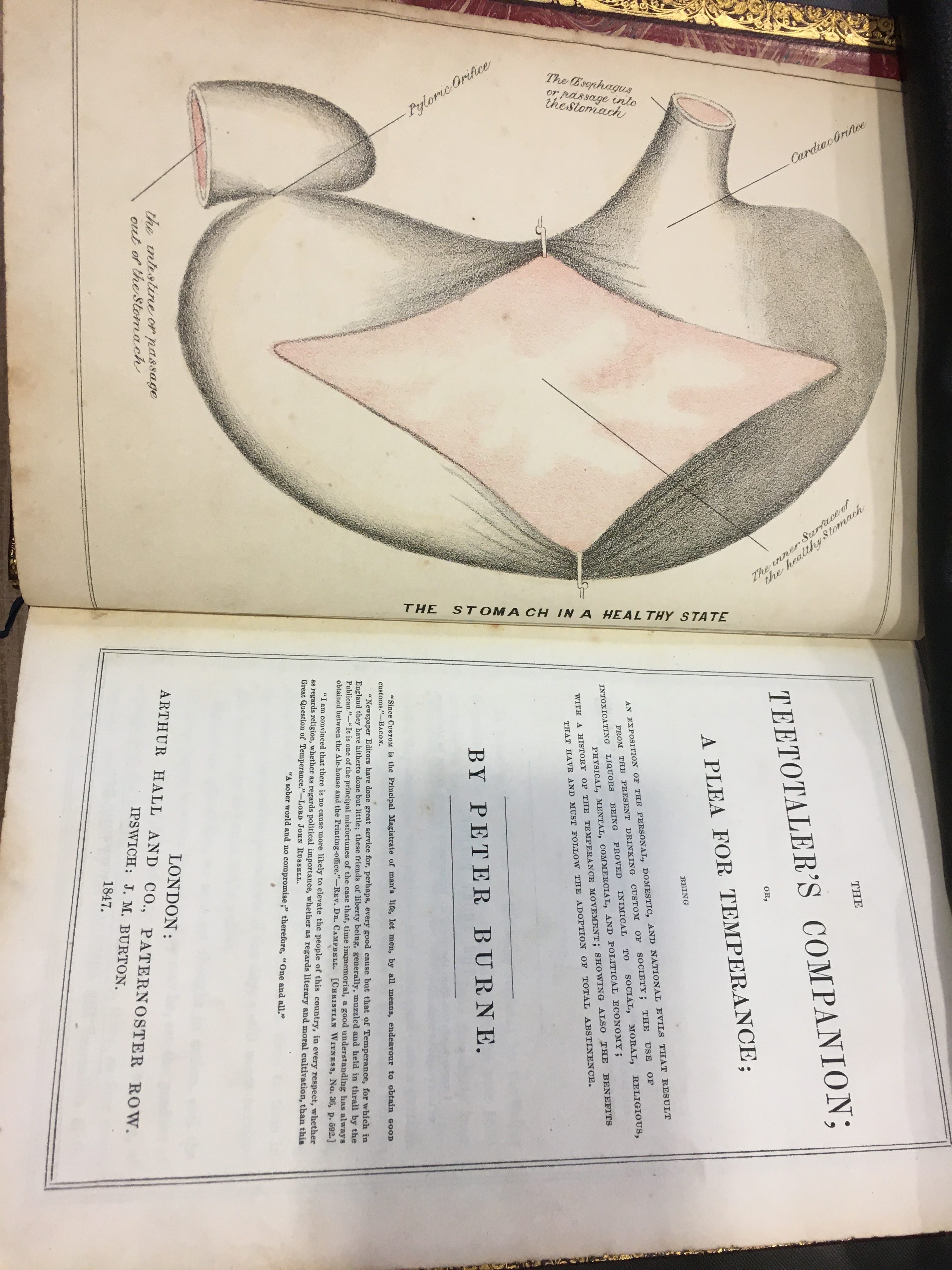
Temperance literature comes in two sizes: huge 500-page tomes like The Teetotaler’s[1] Companion [1847] which attacks the subject from every angle, and very short pamphlets of a few loose pages blasting out a single point, loudly and clearly. So, do you prefer to take your remedy as a long, ice-cold draught or as a fiery, down-in-one shot?
Long books by temperance campaigners make interesting observations about the traditional ‘use’ of alcohol in various communities, which are worth reading as social histories of a booze-addled nation. For instance, The Teetolar’s Companion describes the drinking customs of Victorian miners or colliers (who appointed a Cupbearer for their nights out, and issued forfeits for drinkers who broke their rules), masons and builders (who held an organised drinking bout called “the rearing” after erecting a new roof), and railway workers (who celebrated the opening of a new line with a “drunken revel”).
All these people were poisoning their bodies, minds and morals, and destroying society according to the The Teetolar’s Companion, which offers a choice of two remedies to individuals in need of a cure — a long pledge or a short pledge:
The Long Pledge. ‘I agree to abstain from Wines, Malt Liquors, Cider, Ardent Spirits, and all that can intoxicate; and to neither give nor recommend the same, but in all suitable ways discountenance their use throughout the community.’
The Short Pledge. ‘I agree to abstain from the use of all intoxicating liquors, except as medicines, or in a religious ordinance.’
This book ends by issuing another gun-to-head choice: ‘Which, reader, dost thou declare for—the peacefulness of temperance or the horrors of intemperance—which?’
Possibly at this point you’re thinking that a short temperance tract would make for easier reading. Mm, maybe. Like government propaganda messages (“Don’t drink and drive”), anti-drinking pamphlets published by Temperance societies across the UK during the mid-1800s try to hammer out a single point to bleary-eyed audiences:
‘Intoxication is the gulf which finally swallows up all that remains to a man of reason or physical strength, who has been gradually destroying them by previous habits of drinking…’
‘Temperance is the deliverance of the body from the fetters of a strange and powerful foe.’
‘Come and help us to do battle against one of the strongest enemies to the social – the eternal interests of men.’
The problem: alcohol.
The solution: abstinence.
The call to action: Come join us. Take the pledge. Save your soul!
These core components of Temperance tracts are, in essence, the basic elements of all kinds of bossy books — and of didactic writing in general. They’re fascinating to me as exercises in persuasive rhetoric, and for that reason I’d recommend them to anyone who is studying (or indeed practising) advertising, propaganda or public speaking.
Look at how these impassioned (and, by the way, emotionally intemperate) Victorian teetotallers pull out all the persuasive stops in the quotations above, using every traditional tool of a rhetor’s trade: rhythm, repetition, analogy, hyperbole, etc. It’s a lesson in how to be bossy on paper.
In pointing out the linguistic joys of temperance tracts, I don’t mean to dismiss their serious concerns. Alcoholism was a major social problem for long periods of British history, leading to premature deaths and domestic violence. A temperate — i.e. measured — response to compulsive drinking habits would be reasonable. Books or pamphlets that encourage drinkers to temper our intake might be easier to swallow than demands for total abstinence. But teetotalism is a totalising movement, and the tracts urge readers to disavow the stuff altogether. No half-measures; only empty glasses.
I quite like the spirit (sorry, that’s my last boozy pun for the day) of this advice in The Servants Catechism [1843], if I mentally replace ‘servant’ with ‘individual’:
Q. What is required of every servant?
A. To be honest, sober, and obedient.
Q. How is a servant to be sober?
A. She is to be sober in eating and drinking, sober in mind and conversation.
Q. What do you mean by soberness in mind and conversation?
A. I mean being chaste, humble and temperate in mind, thought and speech.
‘Temperate in mind, thought and speech’ sounds a bit easier than the eating/drinking part. Maybe I’ll give it a go. Later, after the weekend.
If you haven’t yet signed up, please consider subscribing. You’ll get: a free post dropped regularly into your inbox, to read or ignore as you wish.
I’ll get: the sense that there are other people in the room, so I’m not just talking to myself. Win-win?
[1] Spellcheck is itching to add a second “l” to Teetotaler, but I’m using the book’s original spelling.
"Later, after the weekend." So funny. :)