
Taking tea
the rules

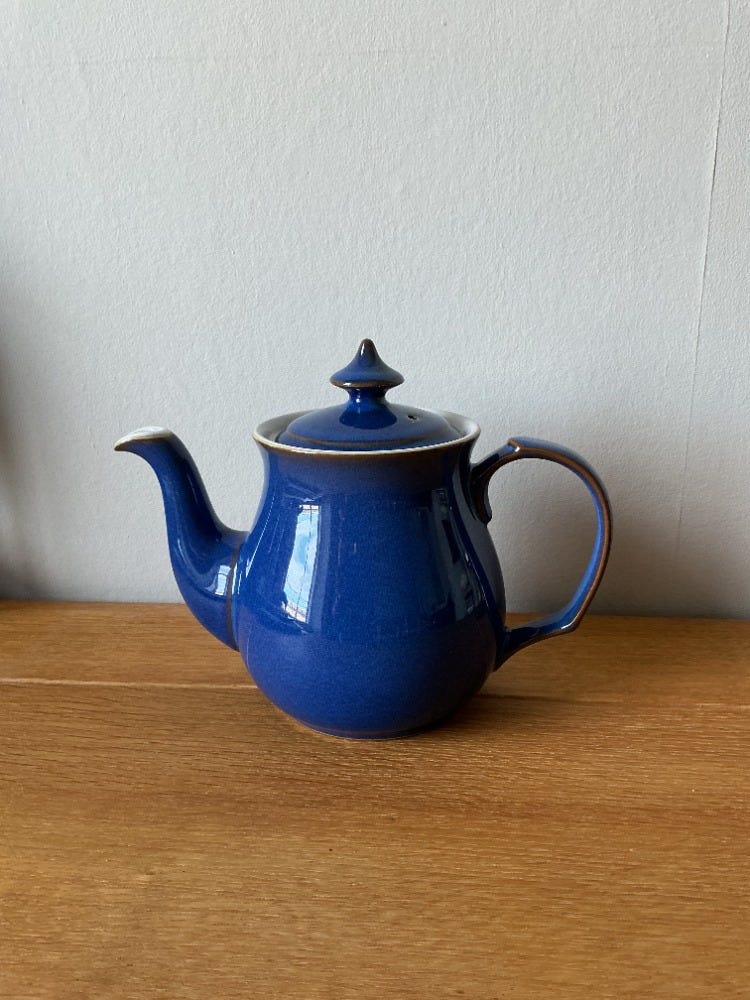
A little light refreshment today, as we consider the traditional British ritual of taking afternoon tea.
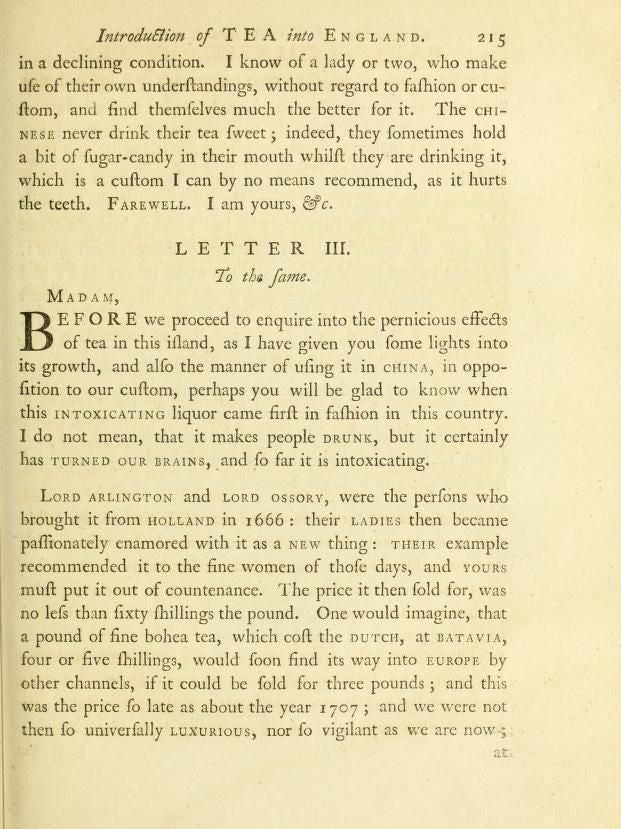
When Brits got hooked on imported tea from China in the 18th century, not everyone was happy. Jonas Hanway, author of many bossy books, published a 150-page Essay on Tea, deeming it ‘pernicious to health, obstructing industry, and impoverishing the nation’. Worried that the new fashion for habitual tea drinking will sap the vital life force from the British people, Hanway claims that tea, like gin, enfeebles drinkers. Many ‘genteel females’ and ‘fine gentlemen’ have been reduced to a ‘continued state of dissipation’ due to this ‘intoxicating liquor’. He begs those virtuous ladies who’ve resisted the lure of tea to use their ‘influence and example’ to ‘abolish the use of tea in Britain’ and ‘SAVE your COUNTRY from ruin.’
Well, that didn’t work. By the mid-1800s, tea was so popular here that Victorian etiquette books typically devote a chapter to the proper form of tea-drinking, with specific rules applying to Afternoon Tea, High Tea, Table Tea, “At Home” Tea, Strawberry Tea, Drawing-Room Tea, or Five O’ Clock Tea (at which, sherry may be added to the table).[i]
Central to every tea-drinking occasion is, of course, the teapot, which acquires almost sacramental importance in instructional manuals. The pourer’s duties are not to be taken lightly. Controlling the teapot is a matter of social, as much as physical, dexterity:
‘The hostess can either sit near the table or stand beside it whilst she pours out the tea. If a gentleman happens to be present it is his duty to hand the cups to the ladies; if not, this office falls to the lot of the daughters of the house.’ Good Form [1889]
Senior women officiate at the tea ceremony while husbands or male guests serve as cupbearers and younger women deputise in various capacities. There are rules for posture (where and when to sit or stand), lips (no slurping or smacking sounds) and hands.
Tackling the teatime sandwich whilst wearing gloves is a particular challenge for ladies, with etiquette expert Flora Klickmann advising:
‘The gloves are not removed when tea only is taken, but occasionally it is necessary to take them off. If the bread-and-butter is carefully rolled so that none of the butter appears upon the exterior of the hand, it will be found possible to partake of it without removing the glove, which is frequently a task of some difficulty – in fact, of so much difficulty that, rather than undertake it, the visitor often takes her tea without eating anything; a practice which the doctors consider to be very injurious to the digestive organs.’
Yikes. Glove-wearing causes women to decline food, which gives them stomach problems. Fortunately there is a solution to these dangerous hunger pangs:
‘Biscuits are invaluable for this reason, and the thoughtful hostess will always provide them.’
Klickmann’s recommendation of biscuits for glove-wearers may help to explain the popularity of manufactured biscuits in this period[ii], since Britain’s biscuit factories were catering not just to a taste for sweet snacks, but to a form of polite behaviour enjoyed (or endured) in many Victorian homes.
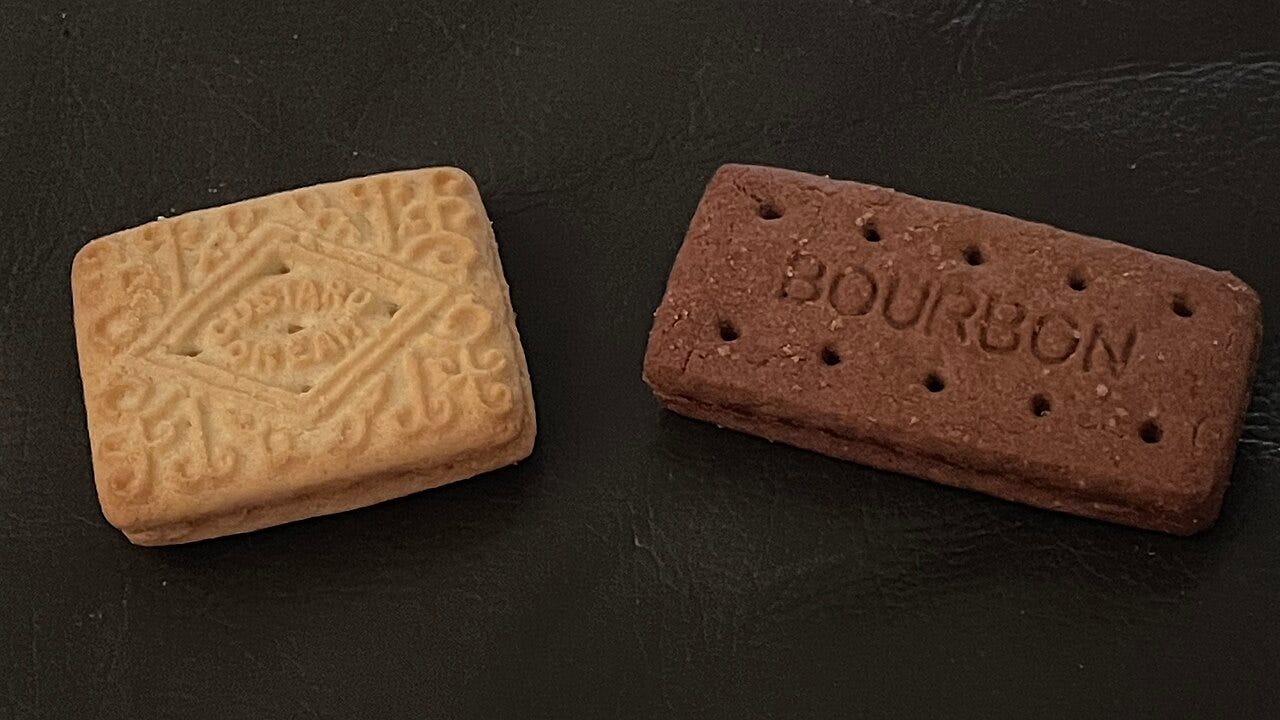
Women are assumed by etiquette manuals to be chiefly responsible for teatime visits, and indeed for the social choreography of polite living in general. The mistress of a household will oversee the table arrangements and keep guests suitably entertained, whilst also supervising daughters or domestic servants who assist in the proceedings. A servants’ manual of 1880 has a chapter on ‘The Manner of Preparing Afternoon Tea,’ with directions on handling cups and saucers, opening doors and announcing visitors’ names. Teatime is orchestrated as a dramatic performance would be, starting with the stage business of answering the front doorbell promptly and politely, to make a good impression on visitors:
‘There is no surer indication of the manner in which a household is conducted than is conveyed in this “answering the door.”’
Guests waiting on the doorstep will judge those who live and work inside the house by how well or badly the preliminary ritual of door-opening is conducted, the manual suggests.
Why make such a song-and-dance over a cuppa? Looking through a socio-economic lens, social historians might see the rigmarole of tea etiquette as a way for upper-class elites to assert their status. But this isn’t the only possible explanation.
At the start of the tea trade, Chinese tea producers taught British importers the value — in all senses — of tea. Carefully brewed tea leaves are delicate and varied. They merit the attention that is paid to them in China, as many Brits came to recognise. Porcelain (known as “china”) tea sets decorated in “oriental” patterns were popular with Victorians keen to acquire the stylishness of Chinese culture by creating a (sweet and milky) British variant of a tea-drinking ceremony. Wearing a “tea gown” made the afternoon ritual a special occasion. It was fun.
All sorts of teatime protocols were created over time, in homes, workplaces and social venues across the country. There is no single way to take tea; everyone has a preferred code of practice (milk in before or after? To dunk or not to dunk that biscuit?) The copious written “rules” published in the late 1800s suggest to me that formality appeals to people’s instincts for theatre, order, and social cohesion. Many of us like dressing up for special events and carrying out prescribed roles — hence the rules for exits and entrances, calling cards, hats and gloves, processions, toasts and orders of precedence which fill the pages of etiquette books alongside instructions for afternoon tea. By wearing gloves to sip tea, Edwardian ladies were participating in a social drama with certain props and a clearly articulated script.[iii]
‘What a wild infatuation!’ exclaims Jonas Hanway in his critical Essay on Tea. Outraged that people are stopping work and getting into debt to drink tea, he fumes: ‘They consider it as their MAGNA CHARTA…’ The pun on ‘char’[iv] is unintentional, I think, but it made me wonder what an actual Magna Char-Ta might say: perhaps a royal proclamation that every subject in the kingdom has the right to down tools mid-afternoon and enjoy a cup of char? As a 5-mugs-a-day teaphile, I’d welcome that—provided there are choccie biccies with it, of course.
[i] Tea, made from tea leaves, is not to be confused with “bubble tea” or fruit “teas” that contain no tea. Black teas imported from China in the early 1800s included Bohea, Congou and Lapsang Souchong. Green teas (less popular with Brits who liked to add milk) included Hyson, Gunpowder and Singlo. In the 2nd half of the 19th century, GB imported more tea from India – Assam, Darjeeling— and Ceylon.
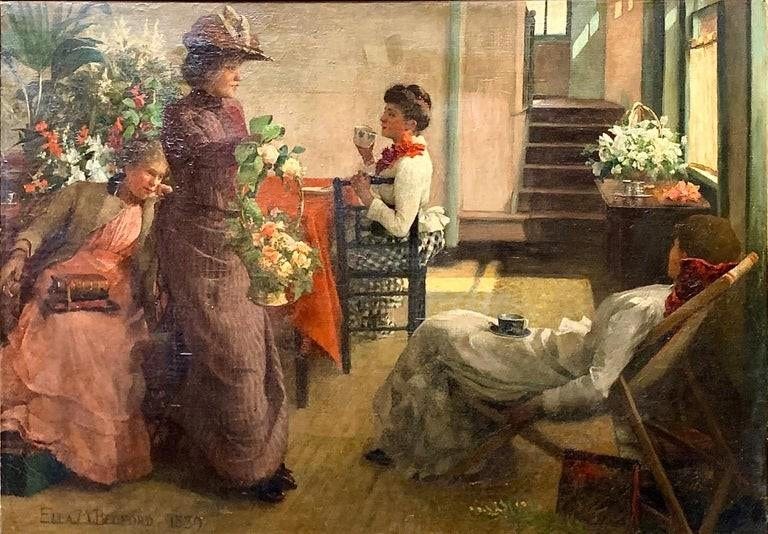
[ii] British biscuits are not to be confused with American “biscuits”. Manufactured varieties made in UK factories in the 19thC include: Iced Gems and Ginger Nuts (1850s), Digestive and Garibaldi – aka “squashed fly” – (1860s), Cream Cracker (1885), Rich Tea (1892), Custard Creams (1908) and Bourbons (1910). Note that Digestives were sold as medicinal cures for gastric trouble, hence the name. Some genius added chocolate on top to create the super-beneficial Chocolate Digestive in 1899. Shouldn’t there be an annual festival to honour these wonderful inventions?
[iii] It’s possible that elaborate teatime customs served an almost religious function in Victorian society, providing an outlet for Protestants to hold a semi-sacramental ritual at a time when the “old religion” of Roman Catholicism had been pushed out of the cultural mainstream. By fussing over the teapot, did Anglicans satisfy a displaced desire for pageantry and elevation?
[iv] ‘Cha’, originating from a Chinese character, became ‘chai’ in some languages and ‘cha’ in others (like Portuguese) to mean tea. A British agent in the East India Company referred to ‘chaw’ in 1615; later, Brits used ‘cha’ or ‘char’. I’ve used AI for these facts and dates, but not to find or read (can AI really read?) any of the quoted texts— because that’s the fun part, which I enjoy doing all by myself.