
Soap and Sociability
Rules for clean living

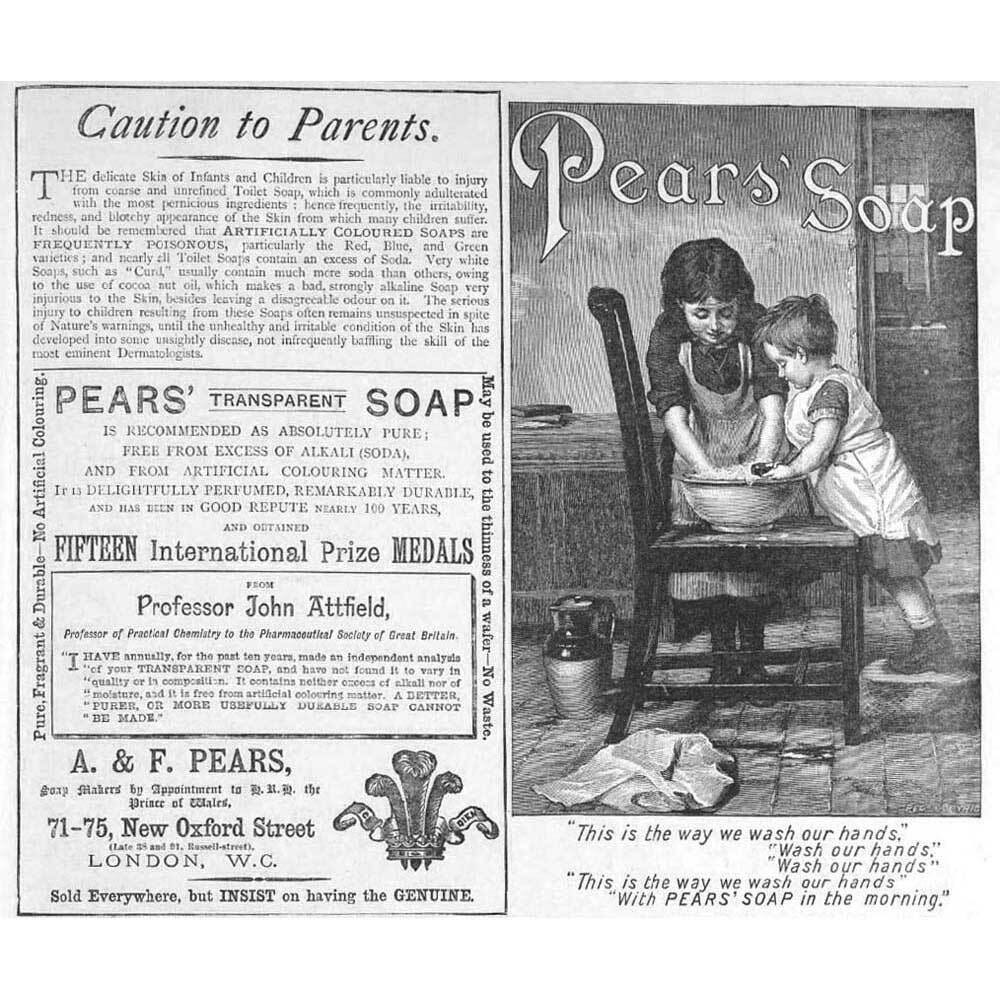
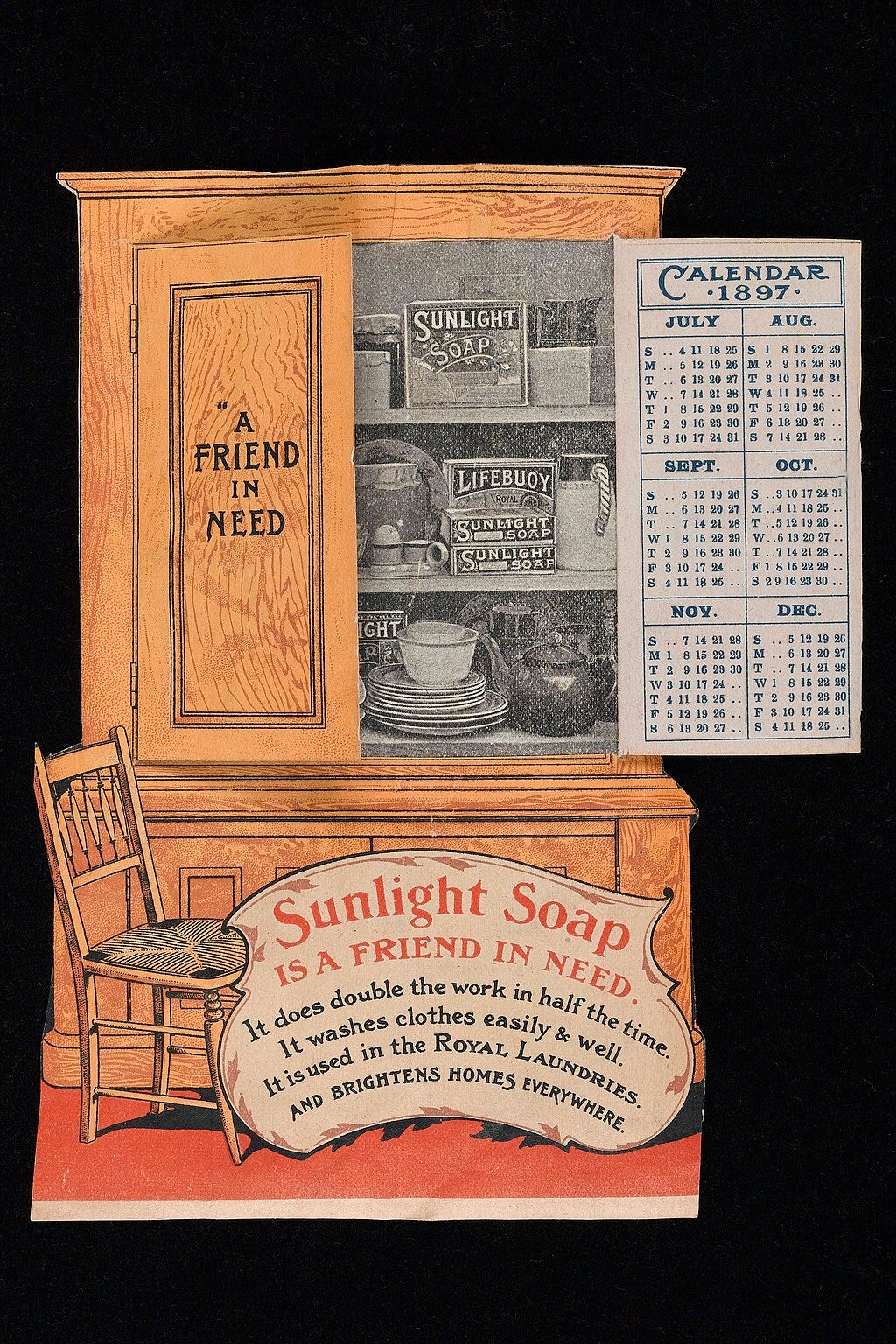
Soapy products in 2026 are designed to please, ease and delight us. Just throw this pouch of blue goo into the washing-machine and voilà! Your freshly scented, featherlight clothes are softened and ready to drape over richly lathered skin. Ad-world is bright with happy soapers burying their noses in fluffy towels or sniffing their delicious hair, mmm-hmm.
Bossy books of yesteryear also recommended soap – but not primarily for pampering. Instructional authors treat cleanliness as a matter of personal virtue bordering on civic duty and spiritual devotion. Hygiene is where manners and morality meet.
To start with the actual product: soap was being advertised in books as far back as 1745, when a shop in Salisbury printed an ad for:
‘The incomparable LIQUID SOAP, which hath given such undoubted proofs of its excellency and usefulness in many years of private practice, as will be sufficient to warrant the recommending it in this public manner.’
This advert appears inside a book of life advice, Rules and Maxims, which was printed by a bookseller called Ben Collins. Collins sold books alongside ink, medicines and toiletries, so the townspeople of Salisbury in the 1740s could pop into their local bookshop for all of life’s essential ingredients: books to read, ink to write, maxims to live by, plus lotions and potions and (liquid) soap to keep their bodies in good order.
Soap and books are treated as tools for solving the same problem: eradicating personal filth. To achieve cleanliness, sinners need to scrub everywhere - inside and out.
‘Next to virtue is cleanliness: a dirty fellow and a worthless wretch, generally means the same thing.’ The Sea Lads Trusty Companion [1779]
Jumping from 18th century Salisbury to the English spa town of Malvern in the late 19th century, let’s consider Dr Thomas Low Nichols, who ran a water-cure treatment and also wrote instructional books such as Human Physiology: the Basis of Sanitary and Society Science [c.1870] and Behaviour: a Manual of Manners and Morals [1874]. The latter starts with a chapter on ‘Care of the Person’, which gives detailed advice on washing, eating and keeping the bowels in a healthy condition – as a precondition of behaving well.
‘The first moral and physical duty of every human being,’ says Nichols, ‘is to be clean.’
He could’ve just said, it’s considerate to spare other people our smells and germs by washing regularly, and left it at that. It would be a bold enough statement to describe personal hygiene as a social duty. But for Nichols, washing is a profound and spiritual, even sacred, activity – and so he declares it to be our moral duty.
To be sure, Nichols is a bit of an oddball – a crank among Victorian cranks; an outlier in a crowded field. He and his wife Mary, both American-born, taught hydropathic techniques at their ‘school of life’ in Malvern, mixing Catholicism and spiritualism (they held seances) with medical and political innovations. Their lives would make a good movie. Nichols advertised soap powder and vegan food at the back of his self-published books.
But the worship of cleanliness was not limited to water-cure enthusiasts in spa towns. Advice on soap use in books of practical advice – even in task-specific, technical manuals - is often scented with a bleachy-sharp aroma of morality. Here’s the opening of Beeton’s Book of the Laundry [1871]:
‘The use of soap for cleansing the body and raiment is as old as the Bible, in which there are one or two direct references to soap; or rather, as it is spelled there, sope.’
This instruction manual for housewives and laundry maids begins with the Bible. We’re to take the laundry seriously because the good book does. Soap is elevated from mundane substance to blessed ritualistic object by this reference to Scriptural authority. Archaic words and spellings - ‘raiment’ for clothing, ‘sope’ for soap – add to the solemn tone. Indeed, Beeton’s[1] fastidiousness over these words is a type of hygiene.
Beeton’s Book of the Laundry specifies the laundry regime to be followed – when and how to clean household linen – whilst stressing the importance of a disciplined method: ‘Order must reign in the laundry conjointly with care, diligence and economy.’ The activity of clothes-washing must be done in the right spirit. Clean linen needs good conduct.
Wash day ends, according to the Beeton method, with a final burst of zealous activity – cleaning the room in which the cleaning gets done: ‘The operations should be concluded by rinsing the tubs, cleaning the coppers, scrubbing the floors of the washing-house and restoring everything to order and cleanliness.’
(And I thought I was being diligent by occasionally pulling fluff out of the drying filter or rinsing the detergent drawer.)
Both the moral rigour and physical vigour of the washing regimens prescribed in old advice books have been dropped from modern advertising, which emphasises sensual pleasure and self-enhancement. The dominant cleaning product of my childhood was “Vim”: the name commanded a certain attitude. Beeton-educated Brits and earlier believers in clean living were taught to wash with vim - not just to remove germs but to purify our souls, discipline our minds, and demonstrate our fitness for human society.
I keep thinking of that shop in Salisbury, which supplied the basics for a good life three centuries ago: books, ink, soap. Read. Write. Wash.
Amen.
[1] Publisher Samuel Orchart Beeton put out various household manuals after the death of his wife, Isabella, with the help of unnamed contributors, reusing material from magazines and other Beeton publications. The name “Beeton” used in the titles of these books is therefore the name of a corporate brand rather a solitary individual. (There’s an earlier post about Mrs Beeton in my BLB ‘archive’.)
I had a copy of Isabella Beeton's book. It was amusing but exhausting to contemplate all those rituals! Thanks for a fun post.
Mmmm.... your articles smells so clean and fresh! The fragrance will linger with me all day.