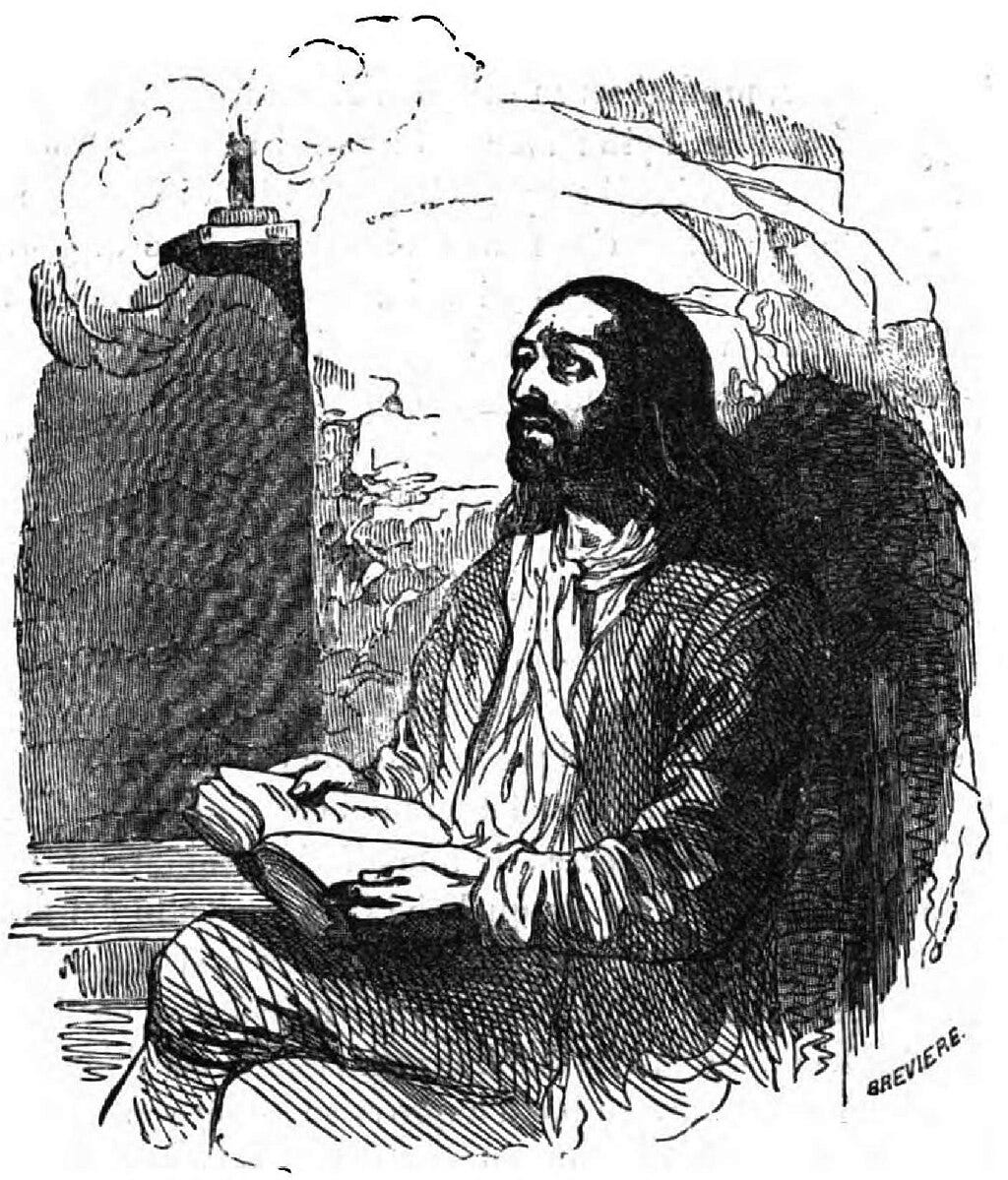
Robinson Crusoe's work ethic

Why do we love castaway stories so much? From Ed Stafford getting air-dropped into remote locations in the Marooned documentary series, to the recent adaptation of William Golding’s Lord of the Flies, via countless island melodramas, celebrity get-me-outs and Desert Island Discs, British audiences lap up stranded-survivor scenarios.
It may have something to do with Lord Baden-Powell, whose handbook Scouting for Boys [1908] proposed the following game for scouts to play:
‘Act a scene of castaways on a desert island. They make camp fire: pick seaweed, grass, roots, etc., and cook them: Make pots, etc., out of clay: Weave mats out of grass: Build raft, and if water is available get afloat in it: put up a mast and grass mat sail, etc.: and punt or sail away, or can be rescued by sighting ship and making smoke signals or getting a boat’s crew of sailors to come and fetch them.’
Thus did the Scouts manual encourage an imaginary game of “let’s pretend to be stranded”, turning this playground activity into an institutionally approved part of the Scouting curriculum. Millions of island-dwelling British children — and other scouts and guides across the world — were actively encouraged to grow up as would-be castaways, enacting their own survival dramas on imaginary islands.
(B-P’s brisk, bullet-point writing style has a wonderfully childlike appeal. He’s far more interested in making smoke signals than in making verb forms agree. Full sentences? No time! Forget syntax & whatnot: list actions, etc.)
But the Chief Scout wasn’t the first English writer to set the public imagination alight with the possibilities of playing a castaway game. Daniel Defoe’s novel The Life and Strange Surprizing Adventures of Robinson Crusoe, of York, Mariner [1719] is presented as a factual account of a supposedly real life story, but of course it’s mostly made up, and invention is at the heart of the book — its main theme, as well as its method.
Cast adrift from society, Crusoe has to invent his own social structures — ways, rules and reasons for living. By necessity he’s a self-inventor, making up his strange surprising life as he goes along. Readers are drawn into this process, wondering: what will Crusoe do next? What would I do, in that situation? To read Robinson Crusoe is to play an imaginative game, a thought experiment with moral and practical components.
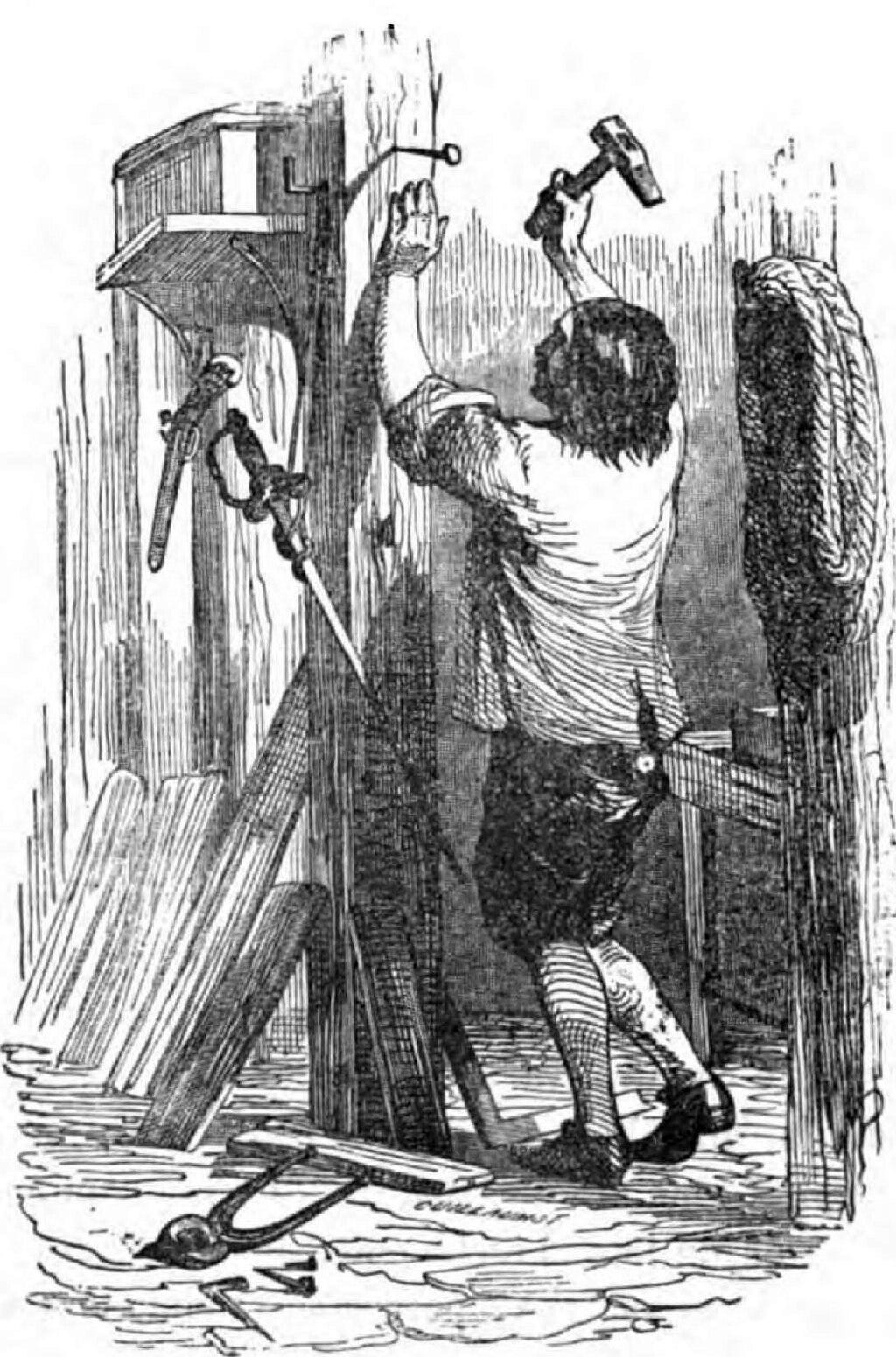
From the moment he washes up alone on the seashore, Crusoe is engaged on the enterprise of teaching himself (and by proxy, instructing a curious reader) how to control himself and manage his environment. The island becomes his school. And what varied coursework it offers: Crusoe masters home construction, carpentry, farming, surveying, fishing and shooting, but also spiritual deliberation and mind-management.
He gathers items from the wreck, keeps lists and ledgers, checks his stock, does accounts. He improvises tools to make a fortress. It’s one project after another.
‘My next work was to view the country, and seek a proper place for my habitation…’
‘So I went to work…’
‘This morning I began to order my times of work…’
‘After my morning walk I went to work with my table…’
‘This day I went to work with it accordingly…’
‘All this time I worked very hard, the rains hindering me many days…’
‘I worked excessive hard these three or four months…’
‘These two whole days I took up in grinding my tools, my machine for turning my grindstone performing very well.’
It’s amazing how hard this expat Yorkshireman works. Hey Robinson, the sun’s shining, man. You’re on a tropical island. Can’t you slow down?
To be fair, he does take Sundays off. Every seventh day Crusoe stops work to observe the Sabbath. Having salvaged a bible from the wrecked boat, he prays.
Crusoe lives by a code of conduct which is partly brought with him from England (his father taught him to aspire to the virtues of ‘temperance, moderation, quietness…’) and partly self-created. Just as the castaway trains himself to be an expert carpenter, so he wrestles with the fears, doubts, mood-swings and melancholy of his own mind, crafting rules to directs his inner life and get his soul in order.
Narrating his own story, Crusoe doesn’t push these rules of conduct on the reader— it’s not overtly didactic— but he engages us imaginatively with his attempts to be disciplined, orderly, self-regulated, industrious, self-reliant, resourceful, organised and steady.
Robison Crusoe was published 1719 in London, where it gave readers an English hero who survives a shipwreck overseas by living like a hard-working, conscientious entrepreneur. The castaway story reflected what we might see as London’s working values in the early 18th century: the virtues of honest, God-fearing hard work and self-improvement which were promoted in conduct books for apprentices (as described in my previous posts on Rules for the Conduct of Life and The Lord Mayor’s Show).
Crusoe’s creator, Daniel Defoe, was a merchant before he was an author. He’d bought and sold various goods (hosiery, wine, bricks), run factories and warehouses, made profits and losses (to the point of bankruptcy), and experienced the risks of overseas business travel at a time of rampant piracy, storms and deadly fevers — all of which surely contributed to the spirit of diligent inventiveness displayed by his fictional hero.
Through Crusoe, Defoe taught readers to play the castaway game as an imaginative exercise in self-reliance, it seems to me. Is that partly what modern survival shows do?
On beach holidays as young kid, I used to draw a shop counter on the sand where I “sold” sand-cakes (lumps of mud transformed by my greedy imagination into sticky buns) to imaginary customers in exchange for shell coins. It was the opposite of a daring physical adventure. Baden-Powell would’ve winced at the lameness of Sand-Cake Shop.
But I like to think that Defoe would’ve approved. Defoe was a tradesman to his core, who believed that keeping a shop, if done honestly, was a worthy vocation. In fact, he was so committed to the shopkeeping profession that he wrote a bossy book for shopkeepers which has been oddly overlooked. I plan to write about it here soon, so stay tuned.